Family History Research in the Age of AI
AI · Genealogy · History · Education
Turn the records you already have into stories, timelines, and discoveries — with AI as your research partner, and you as the historian.
Most people collect records. Very few know how to interpret them.
This site shows you how to take a single census record, document, or photograph - and uncover relationships, movements, and meanings that are not obvious at first glance.
How You Turn Records Into Meaningful Stories
Start with a record
Take a census record, photo, or document you already have
See what others miss
Uncover relationships, movements, and context most people overlook.
Turn it into something meaningful
Turn what you find into a story you can share.
One line in a ledger becomes a life.
James McKevitt, age 28, appears as a single line in the 1891 census of Fish Creek, in what is now Alberta. Just a name, an age, and “farmer.” But read across the record and a life opens up: an Irish-born immigrant, newly married to Julia, homesteading in one of the district’s earliest settler communities, his household recorded as Roman Catholic. From one line in a ledger — a young pioneer couple, their faith, their work, and their place in a community just taking root.
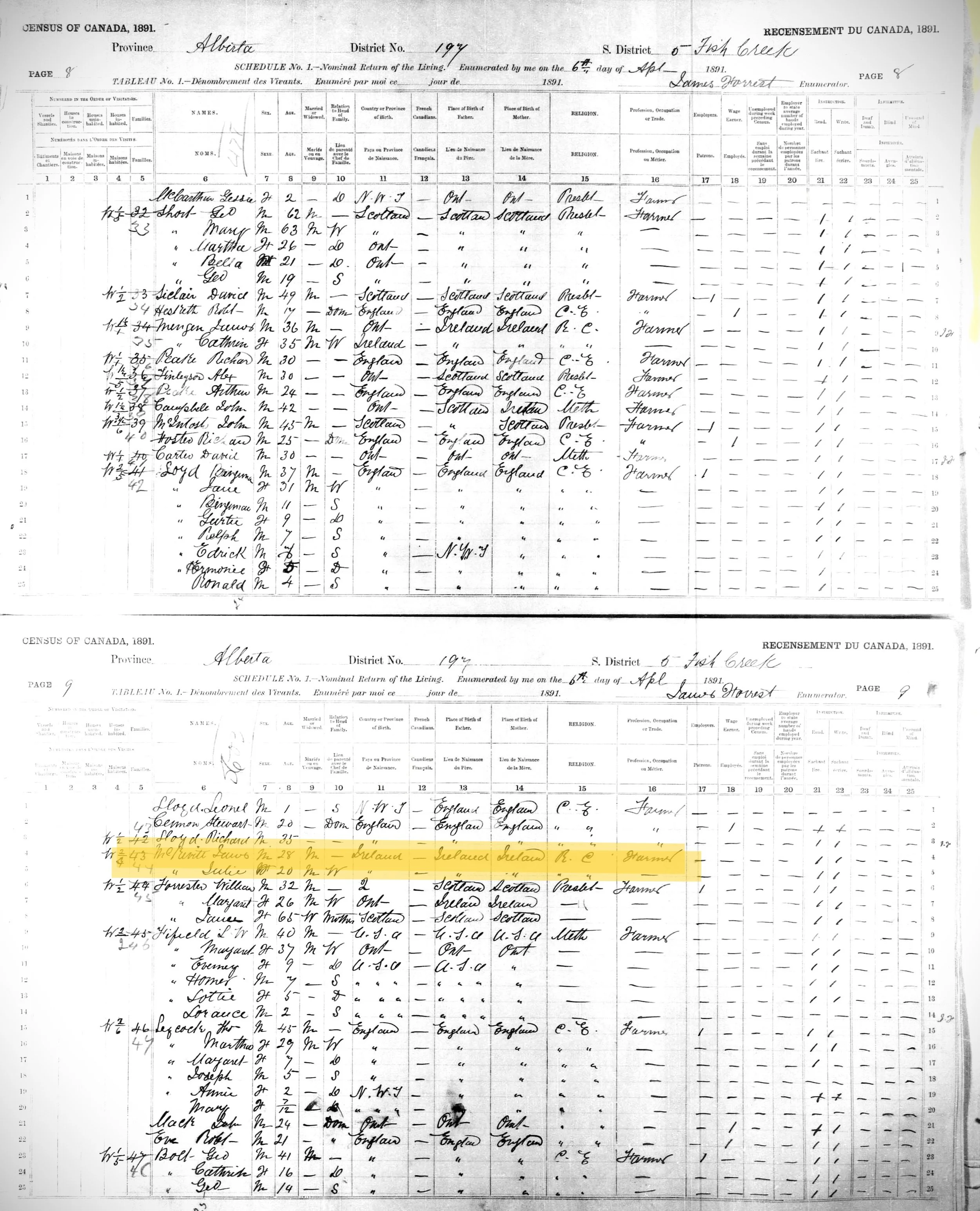
From Record to Story
See how a census page, photograph, or family document can become a story worth sharing.
Before: The Record
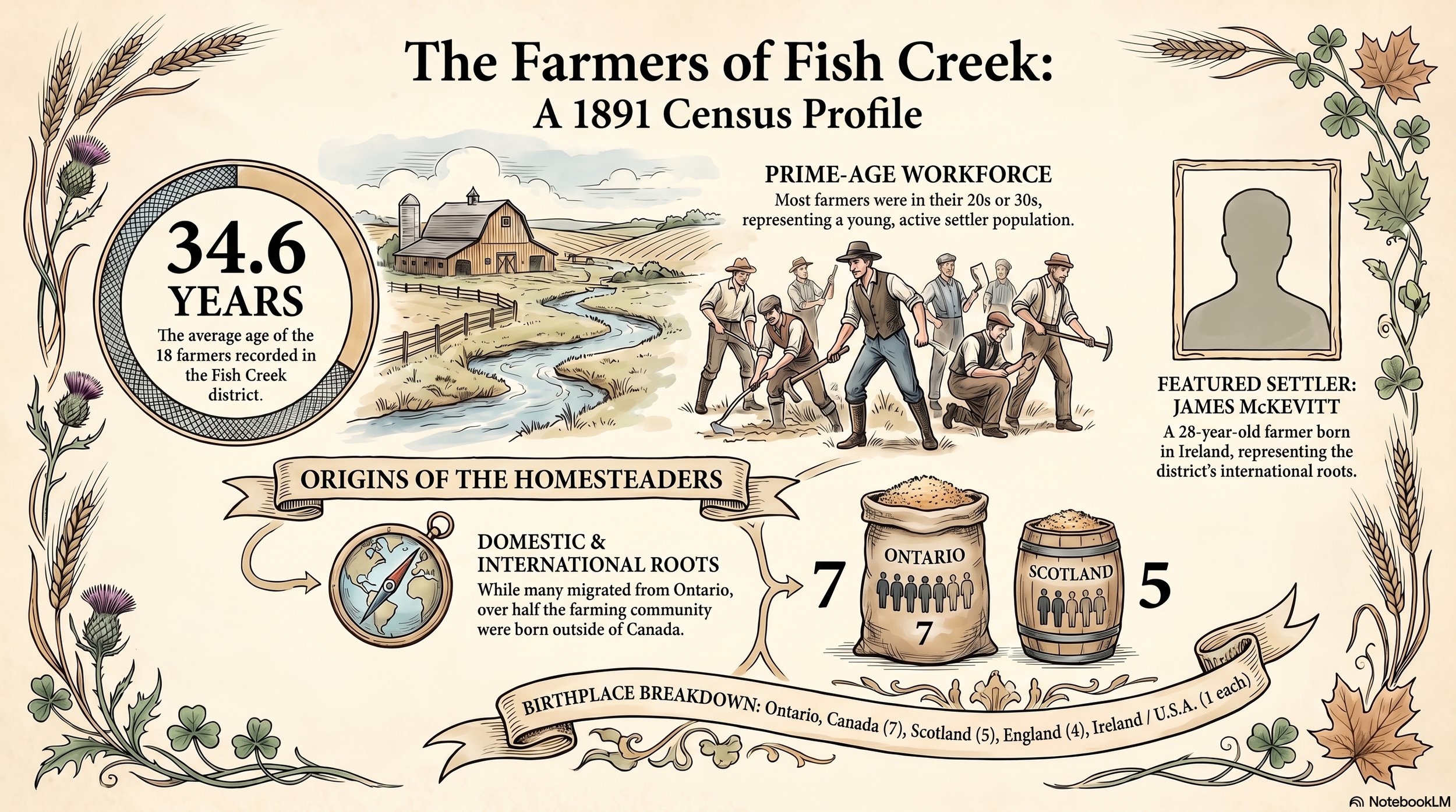
After: The Story
Families
Preserve and share stories that go beyond names and dates.
Who This is For
Genealogists
Turn careful research into readable, engaging narratives.
Educators & Historians
Use records, images, and documents to create stronger teaching and public history materials.
Stories
Readable narratives grounded in records and research.
What You Can Create
Visuals
Infographics, timelines, videos, and shareable family history materials.
Resources
Guides, teaching tools, and legacy pieces for future generations
Ready to create a story worth sharing?
Turn your records, photographs, and research into something meaningful, readable, and lasting.